Puppy vaccination schedule in Australia: C3, C5 and when it's safe to socialise
Updated August 2026 · General information, not veterinary advice.
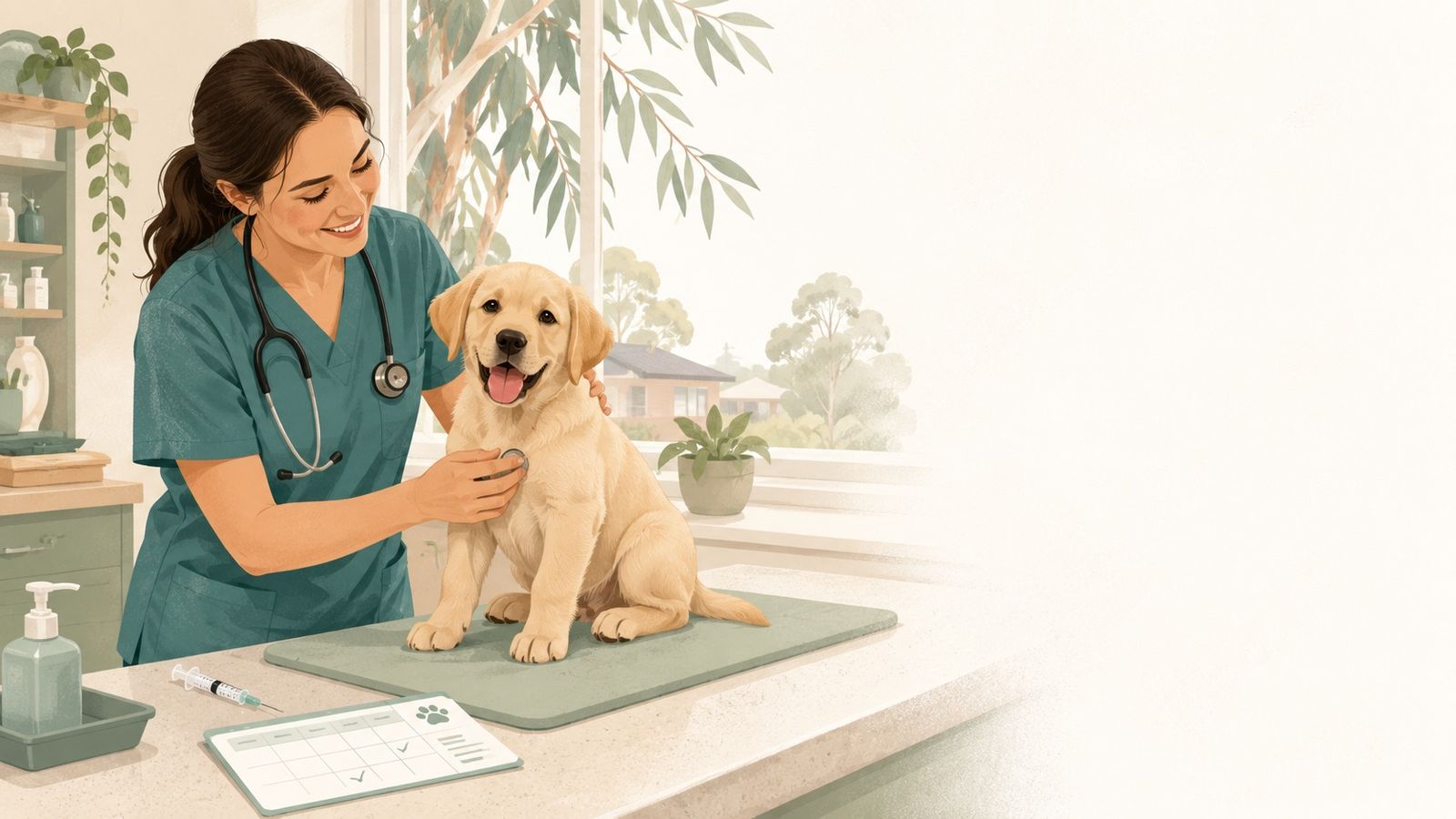
Bringing home a puppy in Australia comes with a vaccination card and a lot of acronyms. Here's the standard schedule most Australian vets follow, what C3 and C5 actually protect against, and the answer to the question every new owner asks: when can my puppy finally go to the park?
The standard puppy schedule
Most Australian clinics run a course of three vaccinations across the first four months of life, roughly four weeks apart:
- 6–8 weeks — first vaccination (usually given before you pick your puppy up; check the breeder or shelter paperwork).
- 10–12 weeks — second vaccination.
- 14–16 weeks — final puppy vaccination. The last dose is given at 14 weeks or later because maternal antibodies from mum's milk can interfere with the vaccine before then.
- ~6 months — booster after the puppy course. This one moved: it was traditionally given about 12 months after the last puppy dose, but the 2024 WSAVA guidelines and the AVA's vaccination policy now recommend it from 6 months of age, to pick up puppies whose maternal antibodies blocked the earlier doses. Some clinics still run the older protocol — ask yours which one they use.
Exact timing varies with your clinic's protocol, your state, local disease risk and your puppy's health — treat the ranges above as the common pattern, and your own vet's plan as the source of truth.
C3 vs C5: what the letters mean
The number counts the diseases covered. C3 is the core vaccine — the one every Australian dog should have:
- Canine parvovirus — highly contagious, often fatal in unvaccinated puppies, and still circulating in every Australian state.
- Canine distemper — a serious neurological disease.
- Infectious canine hepatitis (adenovirus).
C5 = C3 plus canine cough (kennel cough): Bordetella bronchiseptica and canine parainfluenza virus. Boarding kennels, doggy daycare and groomers almost always require a current C5, so most city dogs end up on it.
When can my puppy go outside?
The socialisation window (roughly 3–16 weeks) closes before the vaccine course does, so total isolation isn't the answer either. The usual guidance:
- Fully protected: about two weeks after the final 14–16 week vaccination — then parks, beaches and footpaths are fair game.
- Before then: your own yard, visits to houses with vaccinated dogs, puppy preschool that checks vaccination status, and carrying your puppy in public places.
- Avoid: dog parks, unfenced public grass, and anywhere unknown dogs toilet — parvovirus survives in soil for months.
Want these as dates rather than ages?
Our vaccination schedule generator turns a date of birth and your state into the actual calendar dates — printable, and downloadable straight into Apple Calendar, Google Calendar or Outlook. It covers kittens too.
Adult boosters: annual or three-yearly?
After that booster, many Australian vets now give the core C3 every three years, with the canine cough components topped up yearly — but protocols differ between clinics, and kennels typically require proof of an annual C5. Keep the certificate; you'll be asked for it more often than you expect.
The hard part is remembering
The puppy course fails most often for a boring reason: the second or third appointment slips. A four-week gap is easy to lose track of in the chaos of a new puppy.
That's the problem Household Pet was built for. Add your puppy, log the first vaccination, and the app schedules reminders for each follow-up on the Australian schedule — shared with everyone in the household, so it's never “I thought you booked it”. When you get to the vet, the full history is one tap away.
Related reading
- Paralysis tick season: the east-coast checklist
- How much does pet insurance really cost in Australia?
This article is general information for Australian pet owners and isn't a substitute for advice from your vet, who knows your puppy's health history and local disease risk.